
How We Architected Aksora: A Real-Time QA Platform on Next.js 16 and PostgreSQL
Behind the scenes of building our flagship test management workspace. Why we chose Next.js 16 Turbopack, strict PostgreSQL schemas, and end-to-end type safety.
Akusara Engineering Team
Core Platform Engineers
Behind the scenes of building our flagship test management workspace. Why we chose Next.js 16 Turbopack, strict PostgreSQL schemas, and end-to-end type safety.
The Problem with Fragmented Quality Workflows
Modern software teams often maintain test cases in spreadsheets, track regressions across separate ticketing tools, and report test health through manual slide decks. When an outage hits, nobody has an authoritative source of truth.
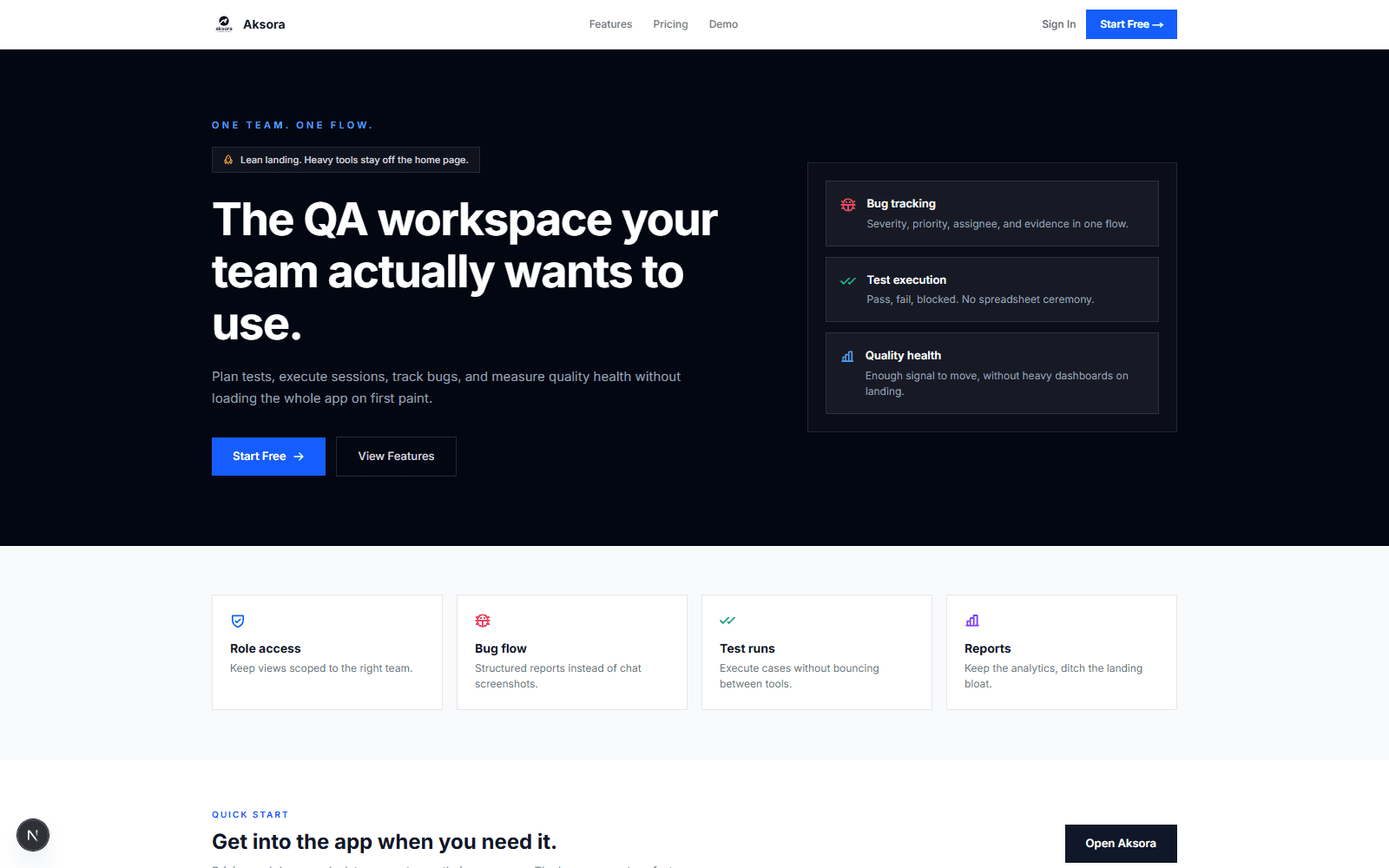
When we designed Aksora, our goal was uncompromising: create an integrated workspace where test planning, live sprint execution, bug tracking, and executive health digests live in a single unified flow.
Architecture Highlights
We evaluated multiple stacks before committing to Next.js 16 (App Router) with PostgreSQL:
- Turbopack & React 19 Server Components:
Data-dense dashboard views with hundreds of test cases render in milliseconds on the server without shipping megabytes of JavaScript to the browser.
- Strict Relational Schemas Over NoSQL:
Quality data is fundamentally relational: Sprints link to Test Plans, Plans link to Suites, Suites contain Cases, and Executions produce traceable Bug records. PostgreSQL provides the transaction guarantees and foreign-key integrity essential for team audits.
- Automated Quality Gates:
We practice what we preach: every pull request in Aksora must pass comprehensive Vitest unit checks and Playwright end-to-end regression suites before landing in production.
-- Core execution tracking relational schema
CREATE TABLE test_executions (
  id UUID PRIMARY KEY DEFAULT gen_random_uuid(),
  suite_id UUID NOT NULL REFERENCES test_suites(id) ON DELETE CASCADE,
  case_id UUID NOT NULL REFERENCES test_cases(id) ON DELETE CASCADE,
  status VARCHAR(20) NOT NULL CHECK (status IN ('passed', 'failed', 'blocked', 'skipped')),
  duration_ms INTEGER NOT NULL,
  executed_by UUID NOT NULL REFERENCES users(id),
  created_at TIMESTAMPTZ NOT NULL DEFAULT NOW()
);

CREATE INDEX idx_executions_case_status ON test_executions (case_id, status, created_at DESC);
Key Takeaways for Product Teams
- Invest in data modeling early: Clean relational boundaries save months of schema refactoring down the line.
- Minimize third-party widget dependencies: Standard CSS and native platform features outlive trendy animation libraries every single time.
Published by Akusara Engineering Team
Core Platform Engineers
Akusara Digital is an engineering and product studio building mission-critical software, custom SaaS platforms, and developer tooling.
Read Next from Akusara
All Articles
Practical Next.js 16 Upgrades: What Turbopack, React 19, and Server Actions Actually Change
Lessons learned migrating production client applications to Next.js 16. Handling asynchronous request APIs, replacing client mutation state with Server Actions, and Turbopack build nuances.

Index Strategies and Connection Pooling in Multi-Tenant PostgreSQL
Why naive single-column indexes break under multi-tenant tenant_id scoping. Practical composite index patterns, JSONB query boundaries, and connection pooling with pgbouncer.